Emergency Lighting Basics
Introduction to Emergency Lighting
Emergency lighting is one of the most important safety systems in a building
Emergency lighting makes it possible—in the event of an emergency—to safely stop working and evacuate a building and find the emergency exit route by following the illuminated exit signs. Emergency lighting is defined as covering both emergency lighting and emergency exit lighting. The functionality and effectiveness of emergency lights and emergency exit lights are ensured by standards that are applicable to all manufacturers. In addition to standards, emergency lighting is subject to requirements laid down in official regulations and statutes. Product compliance is ensured by testing the products using appropriate, standardized measuring equipment.
Emergency lighting must be operational at all times
When selecting an emergency lighting system for a building, the constraints and requirements of the installation environment must be taken into account. Emergency lighting should always be an independent system, so that it is not dependent on the normal electrical supply to the building: in the event of a power failure, the emergency lights will automatically come on without delay and the emergency exit lights will continue to remain lit.
Different types of emergency lighting
Emergency lighting can be implemented using two different methods: either with self-contained emergency lights, or with a centrally supplied emergency lighting system. Self-contained means that the emergency lights contain their own backup power source such as a battery, and centrally supplied means that the backup power source is a central battery unit.
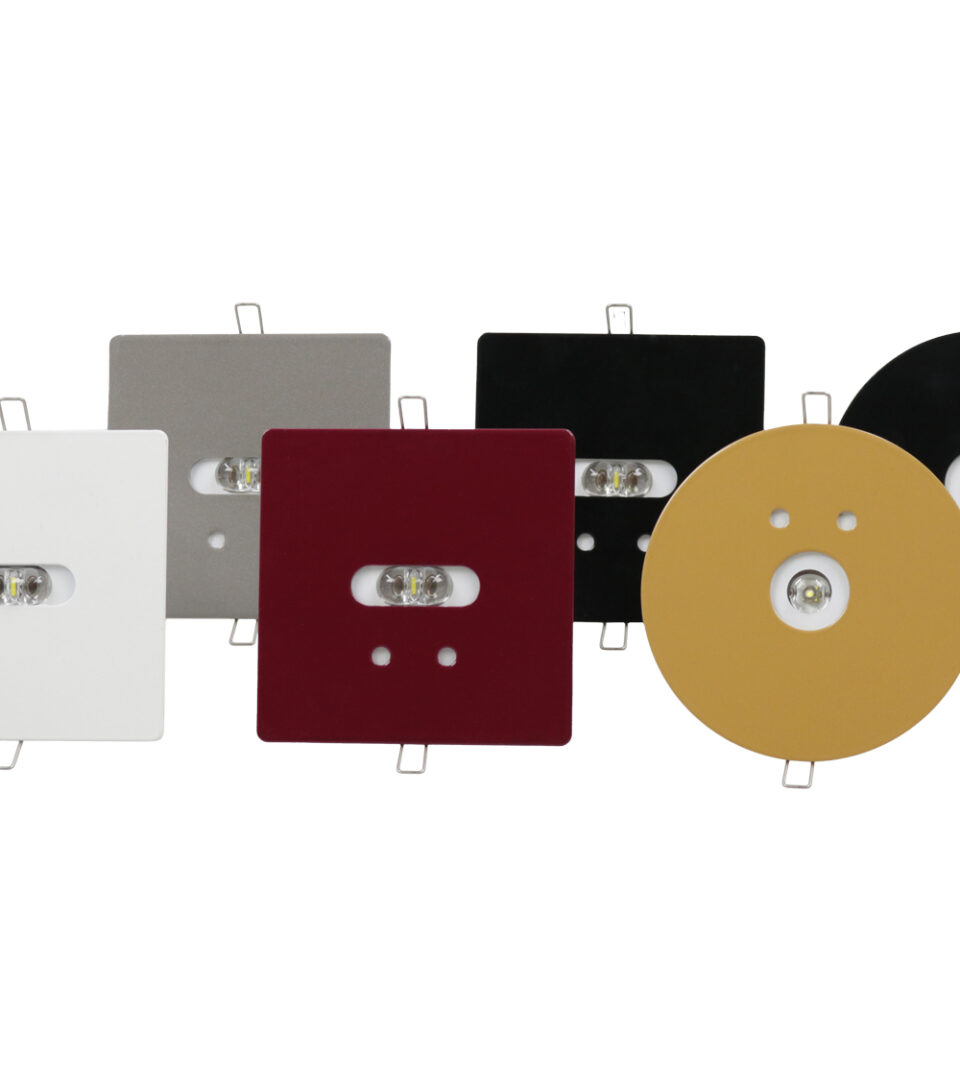
Teknoware offers a wide range of emergency lighting products in both categories—from individually packed self-contained luminaires for even the smallest of properties to centrally supplied and monitored systems consisting of several thousand emergency lighting components. Product designs vary from stylish high-end designer emergency lighting components to robust emergency lighting components designed to withstand even the harshest and most challenging environments.
A self-contained or centrally supplied system?
Self-contained system
In a self-contained system, each luminaire has its own backup power source—in the case of our self-contained luminaires, this is a supercapacitor or a battery.
Self-contained luminaires are particularly suitable for implementing emergency lighting in smaller sites. Our self-contained luminaires include the LumiTest functionality that monitors and tests the luminaires automatically and reliably.
By combining supercapacitor technology with our wireless AaltoCtrl remote monitoring system, self-contained luminaires can also be used for even the largest emergency lighting projects. Teknoware’s innovative technological solutions make it possible to use modern emergency lights and emergency exit lights in large renovation projects without the need for additional cabling.
Centrally supplied system
In a centrally supplied system, the emergency and exit lights share a common power supply from a central battery unit. In its basic form, the central battery system monitors the mains voltage, maintains the charging of the batteries and supplies power to maintained luminaires in the normal mode. When mains supply is lost, the central battery unit supplies battery power to all the luminaires connected to it.
The structure of the emergency lighting and emergency exit lights connected to the central battery unit is simple and economical because the luminaires do not have their own backup power source. Batteries can be replaced centrally, and the system can be operated via a user-friendly control panel.
Central battery systems are often considered suitable only for larger properties but when taking into account the ease of the mandatory monitoring and maintenance, it may well be the best solution even for smaller projects of just a couple of dozen luminaires.
Remote management of emergency lighting
Remote management of emergency lighting makes it easier to monitor the system. It provides continuous, real-time data about the emergency lighting system, and all the tests performed are saved in an electronic log. Centralised remote management is available for both centrally supplied and self-contained lighting systems. The remote monitoring system can also be integrated as a part of a building management system.
Emergency Lights and Emergency Exit Lights
Emergency Lights are lights that provide general illumination of escape routes and open areas in the event of an emergency. Emergency lights come into operation when the regular power supply fails and are automatically switched on in the event of a power cut. All emergency lighting has to comply with relevant regulations and standards set by local legislation in terms of both reliability and luminous intensity.
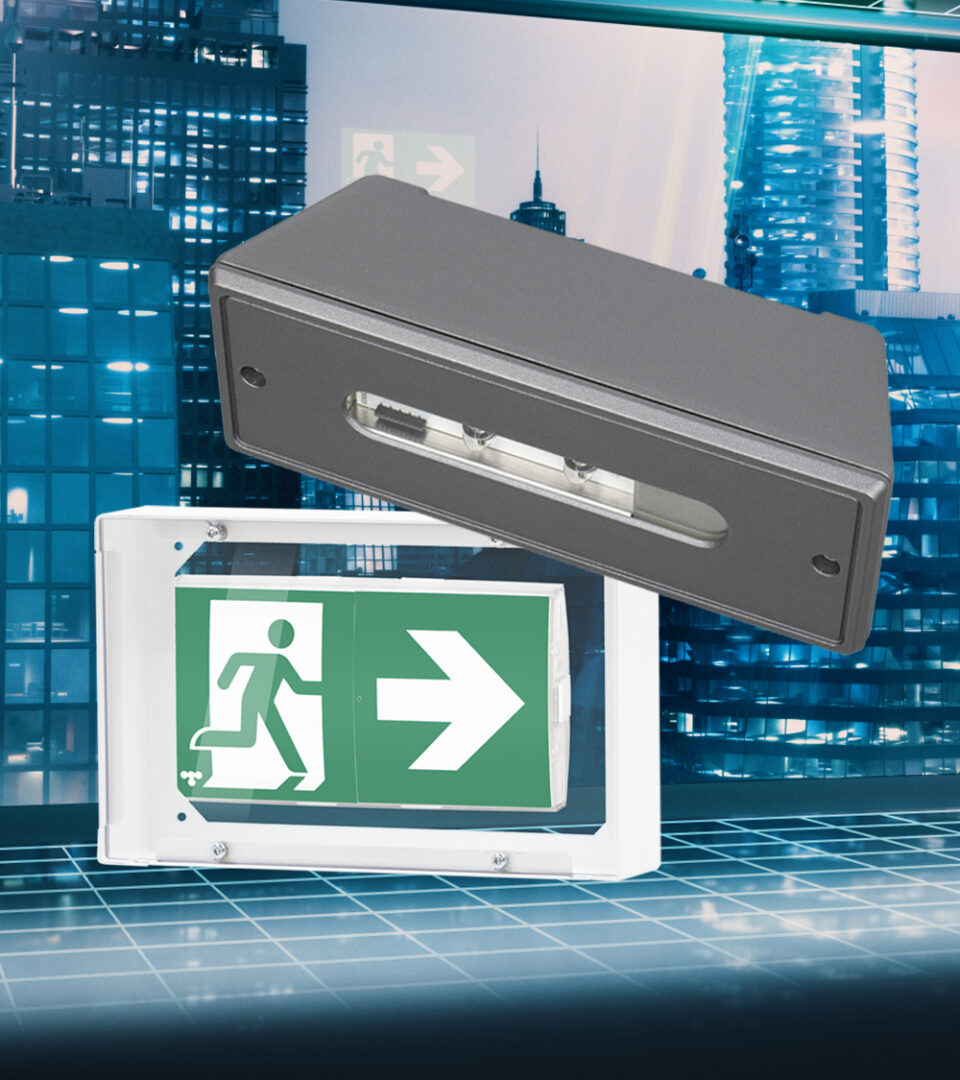
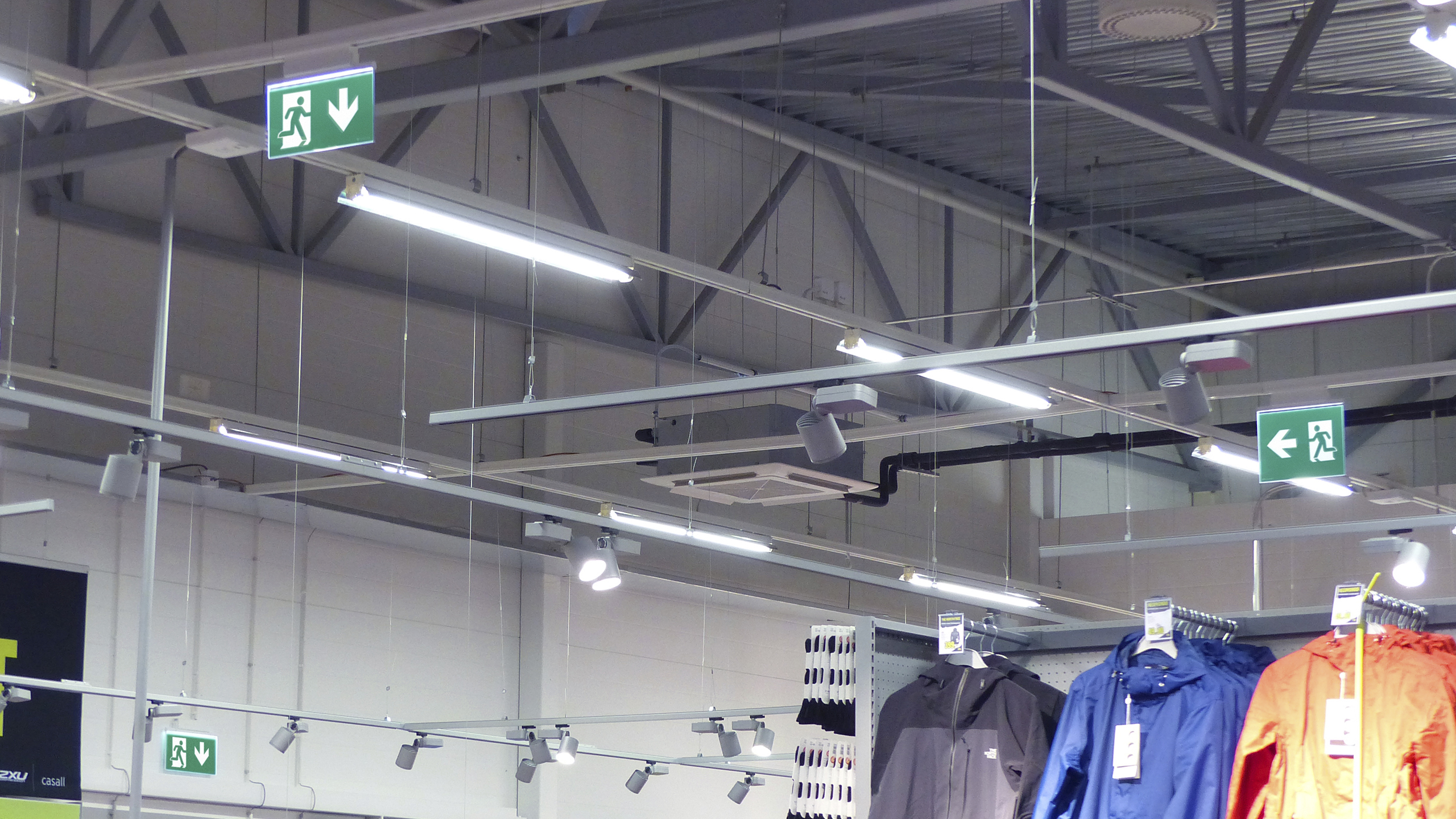
Emergency Exit Lights are lights that mark and identify the emergency exit route from a building or other space and are designed to guide a person quickly and safely along that route. Emergency exit light signs contain directional arrows indicating the way out. Emergency exit lights have to comply with relevant regulations and standards set by local legislation in terms of both reliability and luminous intensity.
Made in Finland
We pride ourselves on delivering long-lasting, cost-effective solutions for emergency lighting in buildings, ships, tunnels and other challenging environments. Teknoware emergency luminaires are designed and manufactured in our own factory in Lahti, Finland, and tested to ensure that they meet strict requirements and high quality standards set for emergency lighting fixtures.